Tag: Patient Care
-

Health Crisis Planning Tool Will Help Seniors Stay in Homes
Feinberg scientist Lee Lindquist, MD, has received a research award to develop a web-based planning tool that will help seniors create a blueprint for their end-of-life care.
-

Walking at Home Improves Speed, Endurance for PAD Patients
Mary McDermott, MD, professor in general internal medicine and geriatrics and preventive medicine, recently published a study in JAMA that may change clinical guidelines for patients with peripheral artery disease (PAD).
-

New Public Policy Leads to Improved Stroke Care in Chicago
More suspected stroke victims received emergency care and potentially life-saving treatments in Chicago’s stroke centers thanks to a 2011 policy change under the Illinois Primary Stroke Center Act.
-

Center for Education in Health Sciences Honors Graduates at Convocation
Graduates of the sixth class of the Master of Science in Healthcare Quality and Patient Safety program and the third class of the Master of Science in Health Services and Outcomes Research program were recognized at the Center for Education in Health Sciences 2013 Convocation on June 29.
-

Rewriting the Care Plan for Heart Failure
Clyde Yancy, MD, MSc, chief of medicine-cardiology, and a group of scientists and healthcare professionals recently published new clinical guidelines regarding the care of patients with heart failure.
-

Interns Get Into Shape Before Starting Residency
Interns spent three days in an intense training “bootcamp” to get ready for their residencies, which start in July. This year, the program has expanded to include general surgery residents and two new skills: chest x-ray and EKG interpretation.
-
Faculty Honored for Quarter-Century of Service
The Northwestern Medicine® community recently recognized forty-nine faculty members for their 25-year careers at Feinberg. The honorees joined other active faculty who have reached the quarter-century service milestone during an evening of celebration on June 19.
-
Single-Dose Radiation Effective for Cutaneous T-Cell Lymphoma
Bharat Mittal, MD, has spent more than a decade looking into the treatment of skin lesions, publishing his findings in the International Journal of Radiation Oncology, Biology, Physics.
-

Could Novel Drug Treat Autism and Fetal Alcohol Disorder?
In a surprising new finding, a Northwestern Medicine® study has found a common molecular vulnerability in autism and fetal alcohol spectrum disorder. Both disorders have symptoms of social impairment and originate during brain development in utero.
-
New Therapy for Fever-Induced Seizures in Children Targets Calcium Channels
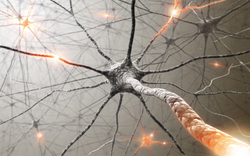
Research published in The Journal of Neuroscience identifies a new key factor in the generation of febrile seizures, leading to a new therapeutic target for humans.