Author: kwm107
-

Ryans Make Historic Gift Naming the Havey Institute for Global Health
Northwestern University Trustees and alumni Patrick G. Ryan and Shirley W. Ryan have made a historic gift to name and endow the Robert J. Havey, MD Institute for Global Health.
-

Brain Insult From Hypertension Discovered in Middle-Aged Adults
Hypertension that leads to vascular dementia in older adults begins to impact the brain by middle age, according to a new study, the first to show the process beginning so early.
-
Northwestern Physician-Scientist Named to National Cancer Advisory Board
Northwestern Medicine physician-scientist Amy Heimberger, MD, has been named by President Biden to the National Cancer Advisory Board, which plays an important role in setting the course for the nation’s cancer research programs.
-

Lurie Cancer Center Receives Renewal of Prostate Cancer SPORE Grant
The Robert H. Lurie Comprehensive Cancer Center of Northwestern University has been awarded a five-year, $9.2 million grant renewal from the National Cancer Institute to continue a Specialized Program of Research Excellence (SPORE) in prostate cancer.
-

Black and Mexican American Adults Develop Diabetes at a Younger Age
Certain racial and ethnic minorities develop type 2 diabetes at a younger age than white Americans, meaning current diabetes screening and prevention practices for them may be inadequate and inequitable, according to a new study.
-

Shirley Ryan AbilityLab Mourns the Passing of Joanne C. Smith, MD, President & CEO
Shirley Ryan AbilityLab (formerly Rehabilitation Institute of Chicago), today announced that AbilityLab’s president and CEO, Joanne C. Smith, MD, has died following treatment for cancer.
-

Prominent Immunologist Named Chief of Allergy and Immunology
Stephanie Eisenbarth, MD, PhD, of Yale University, has been named chief of Feinberg’s Division of Allergy and Immunology in the Department of Medicine, and director of the newly formed Center for Human Immunobiology.
-
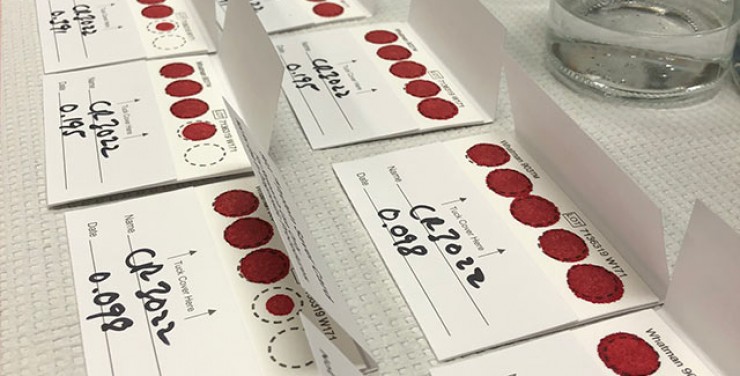
COVID-19 Antibody Study Shows Downside of Not Receiving Second Shot
A new study shows that two months after the second Pfizer/Moderna vaccination, antibody response decreases 20 percent in adults with prior cases of COVID-19 and examines how current vaccines resist emerging variants.
-

‘Alarming’ Rise in Gestational Diabetes in U.S.
The rate of gestational diabetes has shot up 30 percent in young U.S. women over the past decade according to a new Northwestern Medicine study.
-
Award Funds International Vascular Malformation Research
An international collaboration for which Luisa Iruela-Arispe, PhD, chair of Cell and Developmental Biology, serves as North American coordinator, has received a five-year, $7 million Transatlantic Networks of Excellence Program award from the Leducq Foundation.