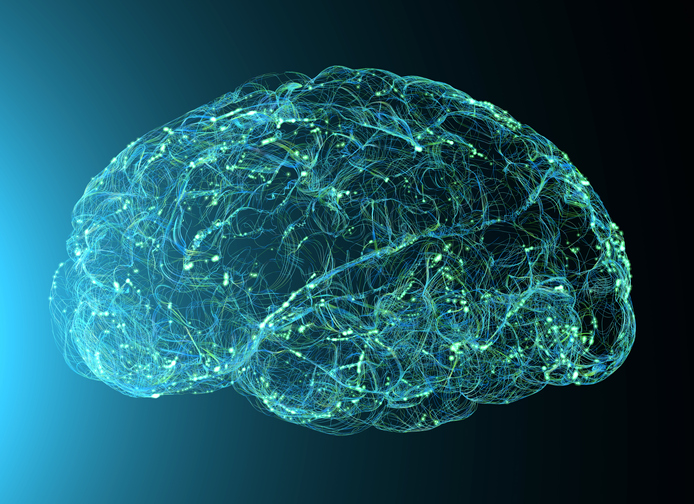
A new Northwestern Medicine study has introduced a novel machine learning method for analyzing how the brain organizes complex behaviors, offering fresh evidence that neural activity is built from reusable “building blocks,” according to the study published in Neuron.
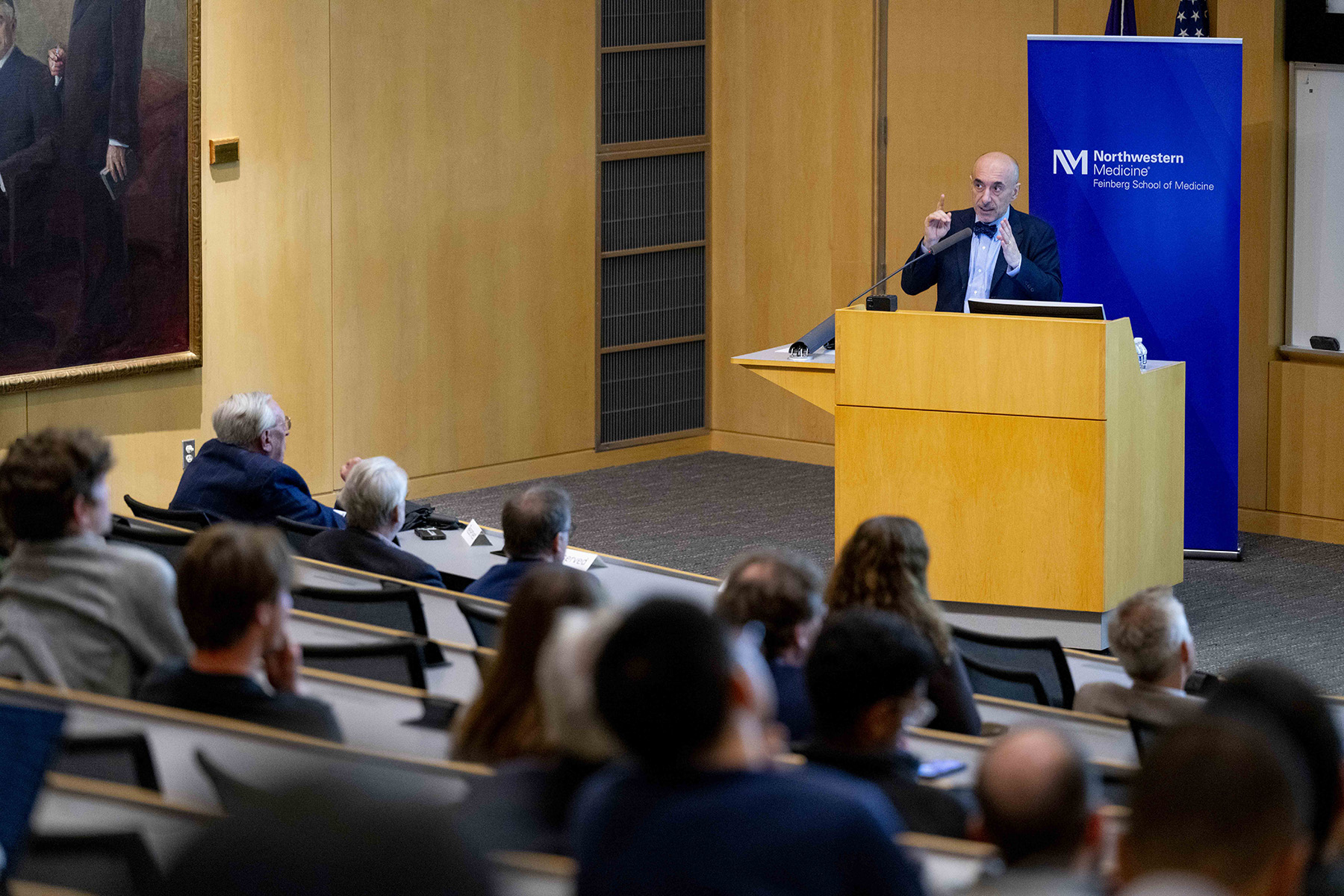
“Historically, people have had an individual neuron–centric view,” said Joshua Glaser, ‘18 PhD, assistant professor in the Ken and Ruth Davee Department of Neurology’s Division of Comprehensive Neurology and senior author of the study. “They asked: what does one neuron do? What part of behavior is it involved in? But over the last couple of decades, there’s been a shift toward thinking about groups of neurons — neural populations — working together.”
That shift has been driven by advances in technology that now allow scientists to record from large numbers of neurons simultaneously. While these datasets contain useful information, they can also be difficult to interpret. Traditional approaches often compress the data into simpler signals, mixing together multiple processes and obscuring what the brain is really doing.
In the study, Glaser and his collaborators developed an analytical method called Sparse Component Analysis (SCA). When applied to large datasets generated by previous neuroscience experiments, their method was able to disentangle signals recorded from hundreds of neurons at once. The method revealed distinct, interpretable patterns of brain activity that correspond to underlying computations.
The investigators designed the method to separate neural activity into a smaller number of meaningful components. Instead of examining each neuron individually, the method identifies shared signals that represent underlying brain activities.
“What’s exciting is that this approach can take these separable computations that are kind of mixed together in individual neurons and actually separate them out,” Glaser said. “You can start to discover what I think of as the building blocks of how computations are happening in the brain.”
By applying SCA across multiple datasets — including motor cortex recordings in animal models, neural activity in C. elegans roundworms and artificial neural networks — the investigators found consistent evidence of “compositional” organization.
“One interesting thing we saw across multiple datasets is that many complex behaviors are built from shared underlying building blocks,” Glaser said.
For example, in studies of reaching movements, the team found that the same neural components were used both to extend the arm and to bring it back.
“The brain is using the same underlying mechanism for the outward reach and the return reach,” Glaser explained. “It’s these same building blocks that get reused.”
The results show that rather than learning a brand-new neural pattern for every action, the brain can recombine existing components to generate different behaviors.
The method also revealed that neural populations carry distinct signals for different stages of behavior. In motor cortex data, SCA separated activity related to planning a movement, executing it and maintaining posture afterward — processes that are often mixed together in traditional analyses.
“This is a way to discover structure that might not be obvious from looking at individual neurons,” Glaser said.
Glaser and his collaborators are already working to extend the method to analyze interactions across multiple brain regions, as new technologies enable simultaneous recordings from distributed neural circuits.
“One direction we’re excited about is understanding how these computations are shared across different regions of the brain,” Glaser said. “That could help us understand how signals flow across the brain.”
Overall, Glaser said he hopes the tool will deepen scientific understanding of how the brain supports behavior and how complex actions emerge from neural signals.
“Our results suggest that a lot of behavior is built out of these reusable pieces,” Glaser said. “And this method gives us a way to find them.”
The study was supported by the National Institutes of Health, the National Science Foundation and the Simons Foundation, along with grants from the McKnight Foundation and the Kavli Foundation. Additional support came from the Grossman Center for the Statistics of Mind, the Gatsby Charitable Foundation and the NSF-Simons National Institute for Theory and Mathematics in Biology.