Northwestern Medicine scientists have discovered how molecular “traffic controllers” in cells influence aging and cellular senescence — a state where cells stop dividing but remain metabolically active.
The study, published in Molecular Cell, sheds light on the process of transcribing DNA into RNA, a critical step in gene expression, and how it is tightly regulated and connected to age-related changes.
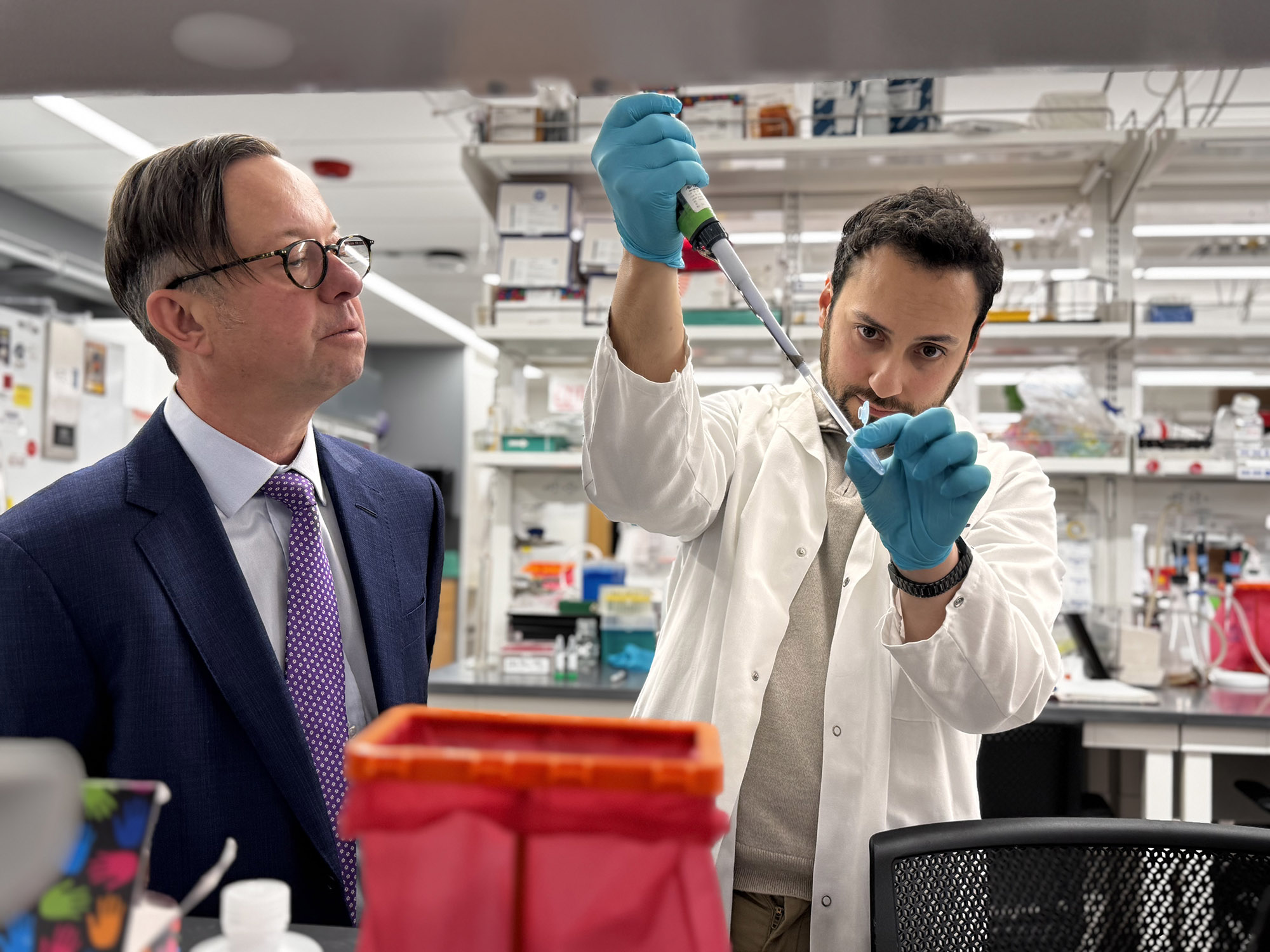
“Previous work from our laboratory showed that a transcription elongation factor, NELF, when deleted, stops cells from growing but doesn’t kill them: They’re in a stage of senescence,” said Ali Shilatifard, PhD, the chair and Robert Francis Furchgott Professor of Biochemistry and Molecular Genetics, who was senior author of the study. “So now, we asked the question: what gene allows these cells to come out of senescence?”
In the study, Shilatifard and his collaborators focused on proteins called transcription elongation factors, which help RNA polymerase II — the enzyme that uses DNA as template to make messenger RNA — move smoothly along the DNA and is important for the regulation of gene expression. Using advanced genetic tools and high-resolution RNA sequencing, they examined the role of elongation factors and identified NELF and SPT6 to be involved in cellular senescence. These proteins were found to play distinct roles in shaping which RNA variants, called isoforms, were produced.

“For a long time, the mechanistic links between transcription elongation and cellular aging were relatively underexplored, especially for specific elongation factors,” said Saeid Parast, PhD, a postdoctoral research fellow in the Shilatifard laboratory and first author of the study. “Our work shows that these factors can directly shape senescence‑associated transcriptional programs, revealing multiple potential therapeutic windows to modulate aging and develop anti‑aging interventions.”
Additionally, investigators observed that two factors in particular, NELF and SPT6, play a central role in regulating genes linked to cellular senescence, a process associated with aging and tissue decline. When scientists depleted these factors for extended periods, the cells temporarily stopped growing and activated senescence-related genes. The team found that this growth arrest was reversible, however, suggesting that senescence can be modulated by tweaking transcription machinery.
Further experiments revealed another player: Elongin A (ELOA). Genetic screens showed that ELOA influences how RNA polymerase terminates transcription at the ends of genes.
“What we find particularly fascinating is the connection between short genes, stress response pathways, and ELOA as a dedicated transcription elongation factor that governs this response at the level of elongation,” Parast said. “The preferential regulation of stress‑responsive short genes by ELOA may reflect an evolutionary adaptation to enable faster transcriptional responses to environmental challenges.”
Removing ELOA disrupted this process and even gave aging human fibroblasts — a type of connective tissue cell — a growth advantage. This suggests that ELOA might act as a molecular brake on cell proliferation during aging, Parast said.
“These findings also draw special attention to ELOA’s primate‑specific homolog, ELOA3, which we previously characterized in our group,” Parast said. “Because ELOA3 contains a repeat cluster with a variable number of repeats across the general population, it raises the intriguing possibility that natural variation in this locus could influence susceptibility to age‑associated disease.”
Taken together, the findings highlight a previously unknown link between transcription regulation and aging biology. By mapping these mechanisms, scientists hope to better understand age-related diseases and explore new strategies to promote healthy aging.
“Now that we know transcriptional elongation control is central in aging, we have this major mechanism to regulate aging,” said Shilatifard, who also directs the Simpson Querrey Institute for Epigenetics. “Since we have found these factors and pathways, we’ll have a greater chance of regulating the process. This will be very exciting for our research and the field more widely.”
The study was supported by National Institutes of Health grants R35CA197569, DP2HG012442, R50CA265372 and T32CA281953.