A drug that blocks calcium release-activated calcium (CRAC) channels may help interrupt harmful immune cell interactions that drive severe viral pneumonia, according to a new study published in The Journal of Clinical Investigation.
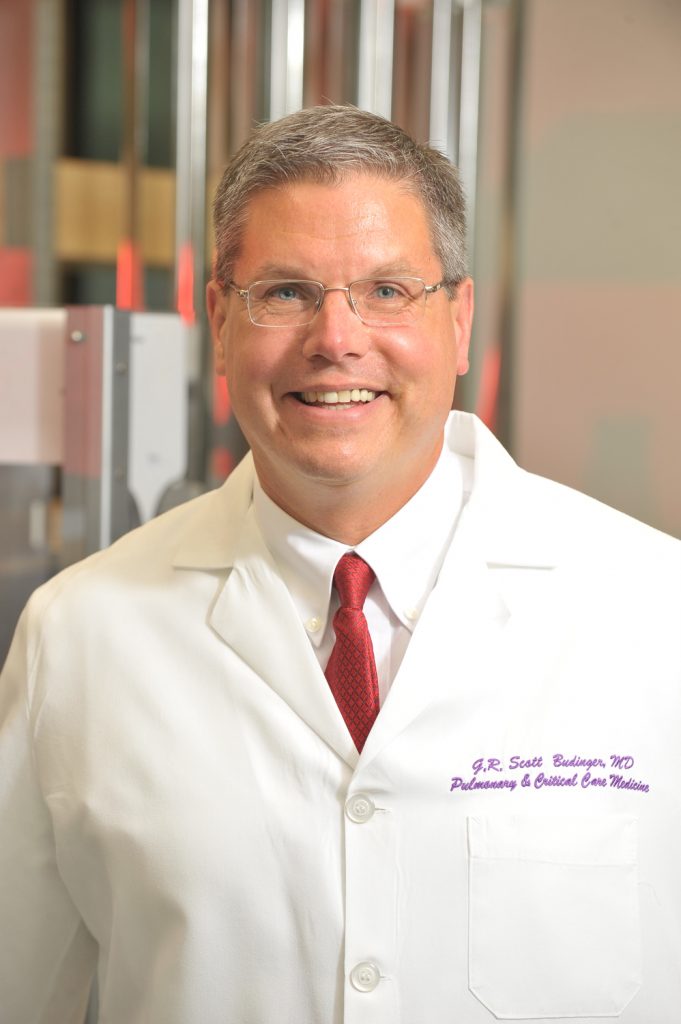
The findings provide new insight into how the experimental drug Auxora works and may inform future precision medicine approaches to treating pneumonia, said the study’s senior author G. R. Scott Budinger, MD, chief of Pulmonary and Critical Care in the Department of Medicine.
The study grew out of observations made during the COVID-19 pandemic, Budinger said.
“During the pandemic, we published a paper in Nature that showed that the persistent inflammation that we were seeing in patients with COVID-19 was in part driven by an interaction between monocyte-derived macrophages that were in the alveolar space and T-cells,” said Budinger, who is also the Ernest S. Bazley Professor of Airway Diseases. “In light of those findings, inhibiting T-cell activation seemed like a really good idea.”
In the current study, investigators administered Auxora to patients with severe COVID-19 pneumonia who required mechanical ventilation in the intensive care unit. Auxora works by inhibiting CRAC channels, which play a key role in activating immune cells. Although other studies of the drug showed a reduction in 30-day mortality in COVID-19 patients, the mechanisms behind this remained unclear.
Because the current study’s patients were intubated and receiving mechanical ventilation, investigators were able to collect bronchoalveolar lavage samples from the lungs and measure both drug levels and biological responses at the site of infection.
Although the study enrolled a relatively small number of patients and was not designed to measure clinical outcomes, the investigators found that Auxora dampened inflammatory circuits between T-cells and macrophages, two cell types implicated in severe pneumonia. Laboratory experiments, including RNA sequencing, further suggested that the drug primarily acted on T-cells, reducing signals that can activate inflammatory macrophages.
“The findings that we had were consistent with the hypothesis that this drug was inhibiting those macrophage T-cell circuits,” Budinger said. “Our findings in Nature were subsequently confirmed by other groups, so this is probably a robust mechanism.”
Budinger said the implications may extend beyond COVID-19.
“We think that this is probably a therapy for patients with viral pneumonia,” Budinger said. “Influenza is the biggest cause of seasonal pneumonia and the most common viral pneumonia that exists now. And this might be important for other viral pneumonias, like RSV.”
At the same time, Budinger cautioned that not all forms of pneumonia trigger the same immune responses.
“Pneumonia is a syndrome,” he said. “Bacterial pneumonia, viral pneumonia, even pneumonia that’s caused by different viruses or different bacteria, may induce different immunologic responses.”
The findings underscore the need for more personalized approaches to treating infectious diseases, Budinger said. Future studies will aim to identify which patients are most likely to benefit from therapies targeting specific immune pathways.
“I think it highlights the importance of very deep phenotyping of our pneumonia patients before we actually start to give drugs that target their immune response,” Budinger said.
The study also shows the value of combining small clinical trials with advanced molecular analyses, an approach investigators believe could accelerate the development of precision therapies.
“Small trials with deep molecular phenotyping are the future of precision medicine therapies,” Budinger said. “This is one of the earliest trials that we did here at Feinberg actually showing the utility of that approach.”
Alexander Misharin, MD, PhD, associate professor of Medicine in the Division of Pulmonary and Critical Care, was corresponding author of the study. Benjamin Singer, MD, the Lawrence Hicks Professor of Pulmonary Medicine and vice chair for research in the Department of Medicine, and Richard Wunderink, MD, professor of Medicine in the Division of Pulmonary and Critical Care, were equally contributing senior co-authors.
Budinger, Misharin and Singer are members of the Center for Human Immunobiology (CHI).
The study was supported by National Institutes of Health grants K23HL169815, a Parker B. Francis Opportunity Award, and an American Thoracic Society Unrestricted Grant.