A Northwestern Medicine study published in the Journal of Clinical Investigation has uncovered a connection between a well-known cancer-related protein and a major RNA modification process, which may inform new treatment strategies against prostate cancer.
Investigators found that EZH2, a protein long recognized for its role in gene regulation, also influences m6A, the most common chemical RNA modification in humans.
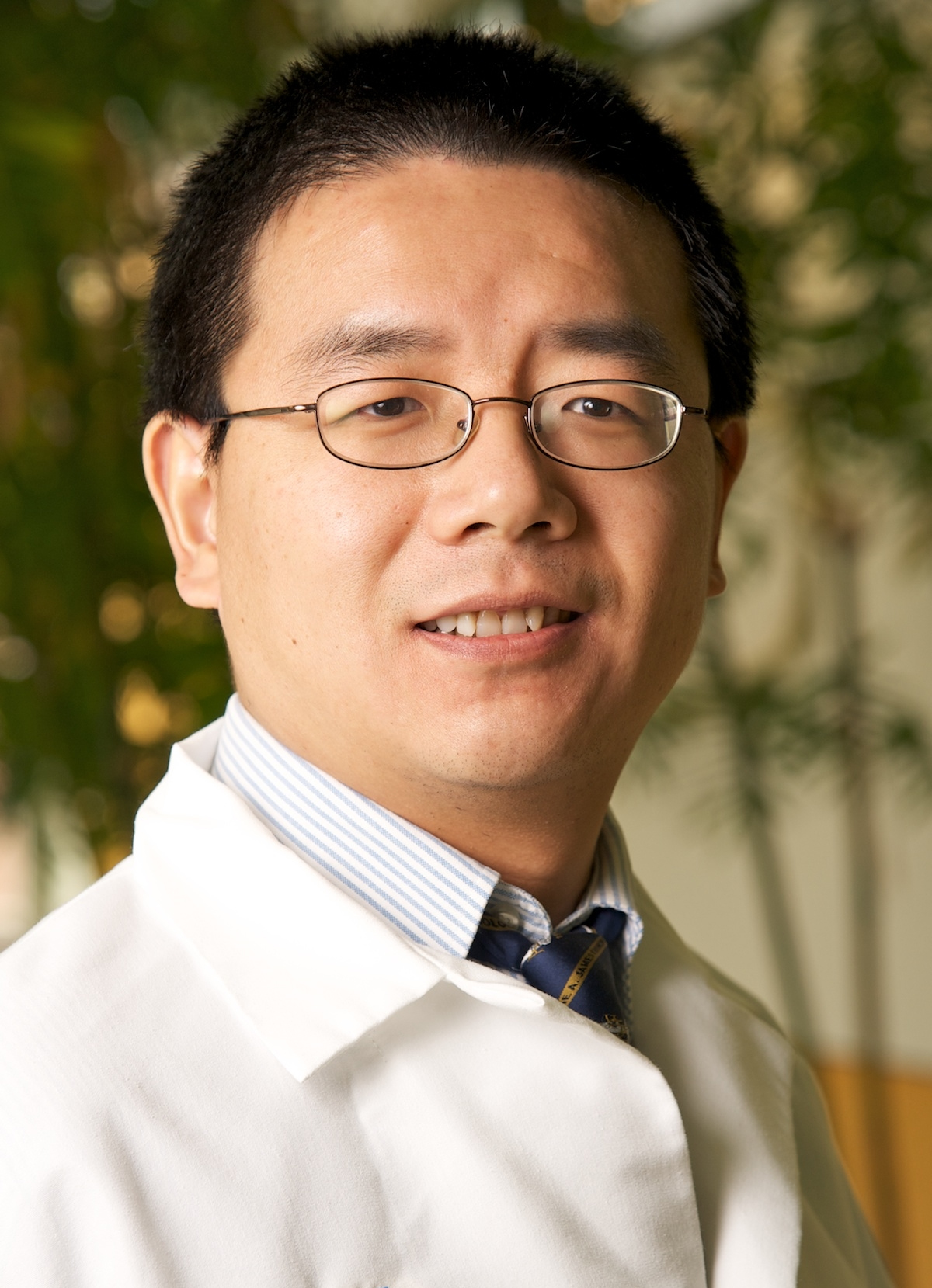
This modification acts like a molecular “switch,” controlling how genes are expressed and proteins are made. While m6A has been linked to cancer progression, the exact mechanisms behind its regulation remained unclear, said Yang Yi, PhD, assistant professor of Urology, who was the first author of the study.
“We have a long-term interest in the potential crosstalk between different kinds of epigenetic regulation types, especially the interplay between EZH2-mediated modification,” Yi said. “We initiated this project to study how EZH2 promotes cancer progression through targeting this m6A modification.”

In the study, the scientists analyzed prostate cancer cells and observed that EZH2 doesn’t simply modify histone H3; it also stabilizes another protein called FOXA1, which in turn boosts the transcriptional activity of YTHDF1, an m6A “reader” protein. That change sets off a chain reaction in which YTHDF1 increases the protein production of key enzymes (METTL14 and WTAP) that add m6A marks to RNA, raising m6A levels in prostate cancer cells. The consequence of this process is that higher m6A levels help cancer cells grow and survive, Yi said.
Next, the investigators blocked EZH2’s enzymatic activity and found that it disrupted the entire pathway, slowing protein production and weakening cancer cell growth. Even more promising, combining an EZH2-targeting drug with an m6A inhibitor significantly reduced tumor growth in lab models of prostate cancer, suggesting a powerful new therapeutic approach.
The findings highlight how cancer cells exploit multiple layers of gene regulation — and how understanding these connections can lead to smarter, more effective therapies.
“Building off this study, we are now working to understand how EZH2, beyond its canonical function, can regulate RNA biology in prostate cancer,” said Qi Cao, PhD, the Anthony J. Schaeffer, MD, Professor of Urology, who was co-senior author of the study.

Rendong Yang, PhD, associate professor of Urology, was co-senior author of the study. Additional Feinberg co-authors included Ertugrul Özbudak, PhD, the Robert Laughlin Rea Professor of Cell Biology in the Department of Cell and Developmental Biology; Sarki Abdulkadir, MD, PhD, the John T. Grayhack, MD, Professor of Urological Research and vice chair for research in the Department of Urology; and Daniel Arango, PhD, assistant professor of Pharmacology.
Cao, Yang and Yi are members of the Robert H. Lurie Comprehensive Cancer Center of Northwestern University.
The study was supported in part by startup funding provided by Northwestern University. Additional funding was supported by U.S. Department of Defense grant HT9425-23-1-0661; National Institute of Health grants P50CA180995, R35GM142441, R01CA259388, R01CA256741, R01CA278832, R01CA285684 and R01CA300246; The Elsa U. Pardee Foundation Research Grant; and the Polsky Urologic Cancer Institute of the Robert H. Lurie Comprehensive Cancer Center of Northwestern University.