Media Coverage
The work done by Northwestern University Feinberg School of Medicine faculty members (and even some students) is regularly highlighted in newspapers, online media outlets and more. Below you’ll find links to articles and videos of Feinberg in the news.
-
Crain’s Chicago Business
–
With $30M from NSF, Northwestern Establishes New Center to Study Cellular Aging, Memory
Northwestern University scientists have a new theory about why cells age, get sick and forget how to heal, and the federal government is giving them $30 million to test it.
“Where most grants are designed to allow researchers to continue on established kinds of work, the STC’s role is to create new fields of science and technology,” said Northwestern biomedical engineer Vadim Backman, who is leading the new center.
-
WGN
–
How Many Sodas Should You Have a Month?
Dr. Santina Wheat, Program Director, McGaw Northwestern Family Medicine Residency at Northwestern Medicine Delnor Hospital, joins Wendy Snyder for this week’s health update.
They discuss the study that revealed at least 25% of NFL players who died in the last 5 years had CTE. They also discuss the potential links between sugary drinks and stomach cancer, and emphasize the need for moderation in food intake.
-
Good Morning America
–
Why Some Companies May Not Be Offering Coverage for GLP-1 Weight Loss Drugs
As use of GLP-1s have increased in the United States, some companies have dropped coverage of the drugs for their employees.
Dr. Sadiya Khan, Magerstadt Professor of cardiovascular epidemiology at Northwestern University Feinberg School of Medicine, told ABC News, “we know that these medications are very effective at reducing cardiovascular disease risk, but they’re not very affordable right now.”
-
The Washington Post
–
Calcium Testing for Heart Health May Have Limited Value for Many, Study Finds
It’s a timely moment to weigh the utility of risk-prediction tools. On one hand, the PREVENT calculator is only just making its way into clinical practice — it was added to blood pressure and cholesterol guidelines in the past year.
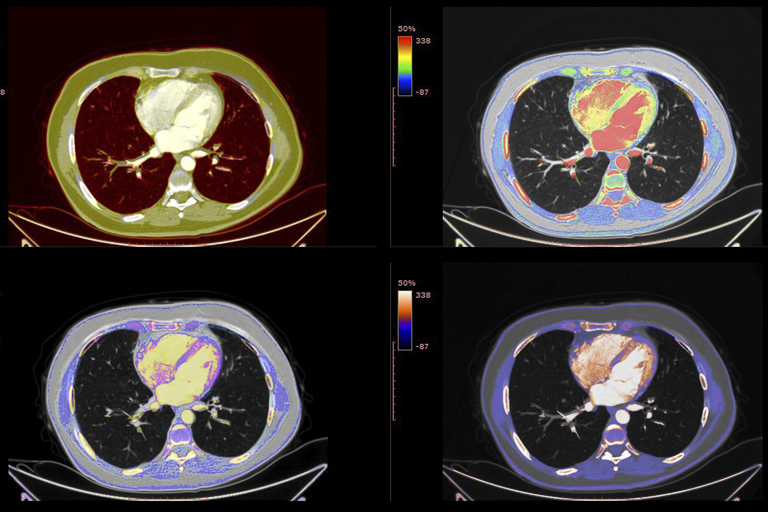
On the other hand, “the use of calcium scores has been exploding” as CAC scans have become more affordable and accessible, said Nilay Shah, senior author on the study and assistant professor of medicine in the cardiology division at Northwestern University Feinberg School of Medicine.
-
The New York Times
–
Celebrities Are Raving About Full-Body Scans. Doctors Urge Caution
Doctors say there are two main types of risk from these kinds of full-body scans. Healthy bodies commonly contain lumps, scars and masses that are not harmful.
False positives can lead to biopsies, extensive monitoring and, possibly, unnecessary surgeries, said Dr. Sameer Ansari, a diagnostic and interventional neuroradiologist at Northwestern Medicine.
-
US News & World Report
–
Meta Settlement Falls Short on Teen Mental Health Protections, Whistleblower Says
A whistleblower whose testimony helped build a child safety case against Meta Platforms said on Wednesday that the firm’s settlement with a coalition of U.S. states does not meaningfully address harms from social media that he described in court.
Dr. Jane Conron, a clinical psychologist at Northwestern University’s Feinberg School of Medicine, said the settlement only requires Meta to offer a non-algorithmically curated social media feed to teens on an opt-in basis, a feature she predicted would go largely unused.
-
USA TODAY
–
GLP-1s May Have a Host of Other Health Benefits
“There are a range of systemic health benefits of GLP-1 medications that are linked to their anti-inflammatory properties, metabolic enhancement and mechanical benefits,” said Dr. Robert Kushner, a founder of the American Board of Obesity Medicine and professor emeritus at Northwestern University Feinberg School of Medicine.
While several benefits beyond weight loss are well established, others remain unproven.
-
Fox Chicago
–
New FDA-Approved Drug Offers Hope for Pancreatic Cancer Patients
Northwestern Medicine oncologist Dr. Deva Mahalingam discusses a newly approved pancreatic cancer drug, how it differs from traditional chemotherapy and what it could mean for patients.
-
WGN
–
FDA Approves Blood Test that Can Detect Alzheimer’s Disease
Dr. Ian Grant, behavioral neurologist at Northwestern Medicine’s Cognitive Neurology & Alzheimer’s Disease Center, joins Bob Sirott to talk about a blood test that can detect Alzheimer’s disease, which was recently approved by the FDA.
He explains how similar tests are used at Northwestern and how doctors can use this test to personalize treatment plans.
-
NBC Chicago
–
How 2 Chicago Hospitals Were Involved with ‘Game-Changing’ Pancreatic Cancer Drug
The Food and Drug Administration on Wednesday approved a groundbreaking pancreatic cancer drug that experts predict will transform treatment for the notoriously deadly disease.
Dr. Deva Mahalingam, a professor of medicine at Northwestern specializing in pancreatic cancer, says his team was eagerly awaiting the approval. He calls it a “fundamental change” in how we think about pancreatic cancer using targeted therapy.