Archives: Podcasts
-
Epigenetics and Cancer with Ali Shilatifard, PhD
Ali Shilatifard, PhD, hopes his discoveries will lead to a super drug that could end childhood leukemia and other cancers.
-
Artificial Intelligence and Medicine with Mozziyar Etemadi, MD, PhD
Mozziyar Etemadi, MD, PhD, a research assistant professor in Anesthesiology and Biomedical Engineering, is leading deep learning projects in his lab at Northwestern. He talks about a collaboration between Northwestern and Google that uses a deep learning system to predict lung cancer.
-
Heart Failure Deaths on the Rise in Younger People with Sadiya Khan, MD, Msc
A new Northwestern Medicine study has delivered some sobering news about heart failure. It found death rates due to heart failure are increasing, especially in people under the age of 65 and specifically among black men.
-
Eyes May Reveal Risk of Alzheimer’s Disease with Amani Fawzi, MD
A new approach from the field of ophthalmology shows promise in detecting non-invasive biomarkers of mild cognitive impairment, the precursor to Alzheimer’s disease. Northwestern’s Amani Fawzi, MD, explains.
-
Improving Memory Loss in Older Adults with Joel Voss, PhD
As we age, almost all of us have some memory loss. This age-related affliction is normal, but a new Northwestern Medicine study suggests it can be improved with non-invasive brain stimulation that sends electromagnetic pulses into a specific area of the brain. Joel Voss, PhD, an associate professor at Northwestern, led this study, published in…
-
Changes to Endometrial Cancer Treatment with Daniela Matei, MD
Results from a randomized phase 3 clinical trial published in The New England Journal of Medicine could change the way women are treated for later stage endometrial cancer. Northwestern’s Daniela Matei, MD, led the trial and shares the details.
-
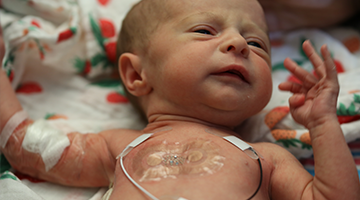
Wireless Technology in the NICU with John A. Rogers, PhD, and Amy Paller, MD
Northwestern’s John A. Rogers, PhD, and Amy Paller, MD, have just published a study in the journal Science that shows how ultra-thin, electronic sensors developed in Rogers’ lab have the potential to make NICUs wireless.
-

Children in the Juvenile Justice System Face Serious Health Risks with Linda Teplin, PhD
The landmark Northwestern Juvenile Project, led by Linda Teplin, PhD, has produced some astonishing findings about health risks and premature deaths of delinquent youth.
-

Serious Eczema Symptoms Beyond the Skin with Jonathan Silverberg, MD, PhD, MPH
Aside from intense itching and dry, irritable skin, people with a type of eczema known as atopic dermatitis also have significantly higher rates of medical and mental health issues.
-

New Evidence on Eggs and Heart Health with Norrina Allen, PhD
A new Northwestern Medicine study reports that adults who ate more eggs and dietary cholesterol had a significantly higher risk of cardiovascular disease and death from any cause.