Archives: Podcasts
-
A Compelling New Lupus Discovery with Jaehyuk Choi, MD, PhD
Northwestern Medicine physician-scientist Jaehyuk Choi, MD, PhD, discusses breakthrough in T-cell research for lupus. Choi and his lab members’ findings elucidate the underlying mechanisms of lupus and suggest therapeutic strategies.
-
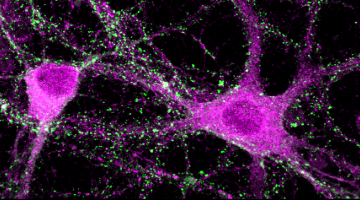
Uncovering Insights into Cancer and Alzheimer’s with Marcus Peter, PhD
For decades, Marcus Peter, PhD, has drilled into an area of research focused on cell death and the roles of toxic and protective short RNAs, with the goal of developing a novel form of cancer treatment. Now, this same line of research has led Peter’s team to uncover new insights into the cause of Alzheimer’s…
-
Discovering New ALS Therapeutic Avenues with Evangelos Kiskinis, PhD
An estimated 32,000 Americans are currently living with ALS, or amyotrophic lateral sclerosis, a progressive neurodegenerative disease that attacks motor neurons in the brain and spinal cord. Northwestern investigators have uncovered novel cellular mechanisms involved in two types of genetic ALS that might lead to future targeted therapies. Evangelos Kiskinis, PhD, shares insights…
-
Leading Pediatric Obesity Research with Justin Ryder, PhD
Northwestern Medicine scientists are at the forefront of research investigating the most effective ways of treating obesity in children and teens and improving their access to care. In this episode, Justin Ryder, PhD, a clinical and translational obesity scientist at Feinberg, talks about the use of new GLP-1–based medications for childhood obesity and his…
-

Driving Innovations in Biostatistics with Denise Scholtens, PhD
Northwestern University Feinberg School of Medicine is home to a team of premier faculty and staff biostatisticians who are a driving force of data analytic innovation and excellence. In this episode, Denise Scholtens, PhD, a leader in biostatistics at Feinberg, discusses the growing importance of the field of biostatistics and how she leverages her skills…
-

The Evolution of Digital Pathology with Lee Cooper, PhD
New advances in digital pathology are revolutionizing the analysis of disease, paving the way for greater accuracy and efficiency when it comes to diagnostics, predicting outcomes and treatment. In this episode, Lee Cooper, PhD, discusses the future of digital and computational pathology and his research on machine learning and pathology, including a recent study published…
-
Strengthening T-Cell Therapy for Solid Tumor Cancers with Jaehyuk Choi, MD, PhD
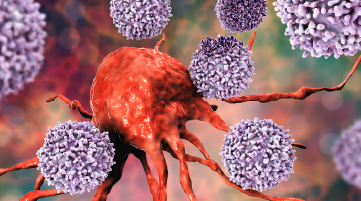
A new study published in the journal Nature details breakthrough T-cell immunotherapy research from Northwestern Medicine. In this episode, Jaehyuk Choi, MD, PhD, senior author of the paper, explains how a gene mutation found in T-cells of patients with lymphoma could hold the key to a potent cancer-fighting immunotherapy for solid tumor cancers, which account…
-
Pursuing Deeper Understanding of Inflammation with Murali Prakriya, PhD
Inflammation is a common feature of many diseases and Northwestern Medicine investigators have identified how a calcium channel contributes to inflammation in the brain and lungs. This could aid in finding new types of therapeutics for inflammation-related diseases and conditions. In this episode, Murali Prakriya, PhD, discusses the evolution of this groundbreaking research in ion…
-

Partnering with Libraries to Address Teen Mental Health with Ashley Knapp, PhD and Robert Simmons, MA
Teens are reporting struggles with their mental health at unprecedented rates, but resources to help these young people deal with anxiety or depression can be difficult to access. An innovative community partnership between Northwestern Medicine investigators and a Chicagoland library is laying the groundwork to bring digital mental health resources to historically underrepresented teens living…
-
Engineering Bacteria to Monitor and Treat Disease with Arthur Prindle, PhD
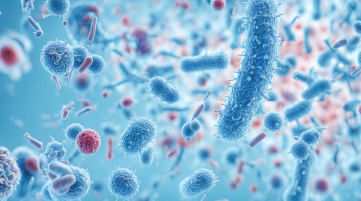
Thanks to advancements in synthetic biology, scientists are now engineering bacterial communities with the goal of using these cells to monitor and treat diseases. In this episode, Arthur Prindle, PhD, explains how his lab is reprogramming bacteria that may be used in the future to detect disease and deliver therapeutics for many different conditions, including…