Media Coverage
The work done by Northwestern University Feinberg School of Medicine faculty members (and even some students) is regularly highlighted in newspapers, online media outlets and more. Below you’ll find links to articles and videos of Feinberg in the news.
-
Crain’s Chicago Business
–
Northwestern Medicine Gets $35M to Build New Community Health Institute
With a $35 million gift from John and Kathy Schreiber, Northwestern Medicine will establish a new community health institute, the health system announced.
“This transformational gift from Schreiber Philanthropy will strengthen the Chicago area healthcare ecosystem, benefitting not only Northwestern Medicine patients, but also those living across Chicago and the surrounding communities,” Dr. Howard Chrisman, president and CEO of Northwestern Memorial HealthCare, said in the release.
-
WGN
–
Dr. Jeffrey Kopin: Good Things Happen When People Lose Weight
Dr. Jeffrey Kopin, Chief Medical Officer for Northwestern Medicine Catherine Gratz Griffin Lake Forest Hospital, joins John Williams to talk about a new study that shows GLP-1 medications may improve male fertility, and why you should be aware of your blood pressure and pulse pressure.
-
WGN
–
Dr. Jim Adams: National Men’s Health Week
Dr. Jim Adams, Chief Medical Officer at Northwestern Medicine, joins Lisa Dent to discuss recent health headlines.
Dr. Adams first addresses whether or not the Ebola outbreak currently in Congo will spread to the Americas as well as how one out every three adults misunderstands medical directions. He later highlights prostate health as we continue through National Men’s Health Week.
-
Chicago Tribune
–
Chicago Philanthropists John and Kathy Schreiber Donate $35 Million to Northwestern Medicine
The new John and Kathy Schreiber Community Health Institute will expand care for uninsured and underinsured patients. The institute will also work with community health care providers and organizations to connect patients with primary care, and coordinate and support care.
“We see a lot of patients through the (emergency department) who don’t have a medical home,” said Dr. Dinee Simpson, chief health equity executive at Northwestern and co-director of the institute.
-
Scientific American
–
U.S. Science Is in Chaos
Countless scientists around the country are going through the same thing. Thousands of federal grants have been frozen or canceled, with perhaps 2,600 still in limbo—about $1.4 billion worth.
Without that trust, the entire system could blow apart. “Laboratories are going to close. Trainees are going to go to other countries or pursue nonscience careers,” says Carole LaBonne, a developmental biologist at Northwestern University. “This compact that has existed since World War II, that made the U.S. the successful, prosperous nation that it is, is being dismantled.”
-
WGN
–
Dr. Elliott: The difference between high cholesterol and high triglycerides
Dr. Sterling Elliott, clinical pharmacist at Northwestern Medicine and assistant professor of orthopedics at Feinberg School of Medicine, joins Lisa Dent to discuss GLP-1s, the difference between high cholesterol and high triglycerides, and more.
And, as always, Dr. Elliott answers listeners’ medical questions.
-
US News & World Report
–
Taking GLP-1s While On BP Meds May Up Your Risk Of Dizzy Spells, Fainting
A new Northwestern Medicine study tracked more than 42,000 adults who started semaglutide, tirzepatide or liraglutide while taking multiple blood pressure drugs. The authors tracked hypotensive episodes, including dizziness, fainting, falls, low blood pressure diagnoses and very low blood pressure readings.
“I’m a big proponent of GLP-1s, they are huge. I’m just saying, let’s watch out for hypotensive events in select patients because I think there’s the potential to do harm,” senior study author Dr. Micah Eimer, clinical assistant professor of medicine at Northwestern University Feinberg School of Medicine, said in a news release.
-
WGN
–
Chat GPT Told Me I Have What?
Dr. Santina Wheat, Program Director, McGaw Northwestern Family Medicine Residency at Northwestern Medicine Delnor Hospital, joins Wendy Snyder for this week’s health update.
They discuss concerns about AI chatbots providing medical assistance and earbuds causing ear infections, and they take listener questions.
-
CBS News
–
A Mom’s Stage IV Cancer Had No Symptoms. An Innovative Surgery Saved Her Life.
Continuing to treat the tumors on her liver with chemotherapy alone would leave Piccoli with only about a 10% chance of surviving more than five years, according to Dr. Zachary Dietch, a transplant surgeon at Northwestern Medicine.
But recent data out of Europe showed that some patients who have the cancerous part of their colon removed and receive a liver transplant can see five-year survival rates jump to as high as 80%, according to Dr. Satish Nadig, director of Northwestern’s Comprehensive Transplant Center in Chicago.
-
CNN
–
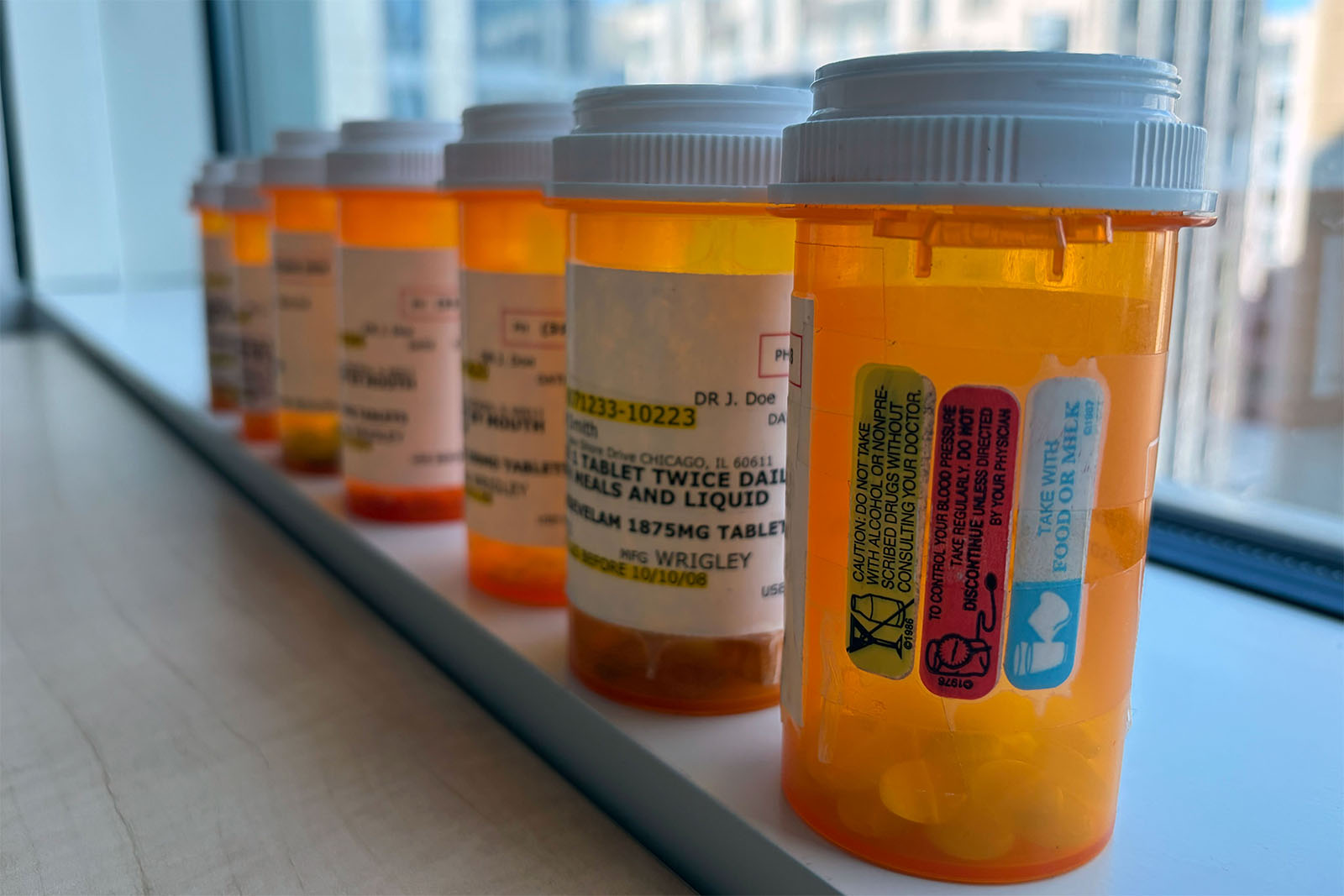
About One-Third of Adults Misunderstand Medical Directions
New research suggests that misunderstandings and mistakes when it comes to health information and medication instructions are widespread.
People wanted to get their prescription information right and do the best they could for their health, but fostering health literacy can be difficult when doctors’ visits are short and the information may not be written in a straightforward way, said senior study author Dr. Michael Wolf, professor of medicine and director of Northwestern’s Center for Applied Health Research on Aging.