Archives: Podcasts
-
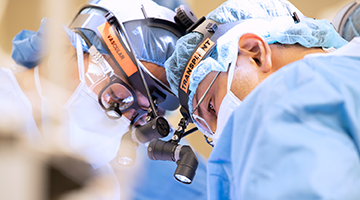
Experimental Strategies in Organ Transplantation with Satish Nadig, MD, PhD
In response to the first successful animal heart transplant into a human patient, internationally renowned transplant surgeon Satish Nadig, MD, PhD, reviews some of the scientific developments that have culminated in this moment and stresses the ongoing need for other experimental strategies. Nadig is also the new director of Feinberg’s Comprehensive Transplant Center.
-

Leading Neuroscience Research to Inform Mental Health Treatment with Sachin Patel, MD, PhD
Sachin Patel, MD, PhD, is the chair and Lizzie Gilman Professor of Psychiatry and Behavioral Sciences at Feinberg and director of the Stephen M. Stahl Center for Psychiatric Neuroscience. In this episode, he talks about the current mental health crisis in this country, his research and vision for the department.
-

Declining Heart Health in Most Pregnant Women with Sadiya Khan, MD, and Natalie Cameron, MD
Cardiovascular disease is the leading cause of pregnancy-related deaths in the U.S. According to a new Northwestern Medicine study published in the journal Circulation, about sixty percent of pregnant women in the U.S. have poor heart health. Study authors Sadiya Khan, MD, and Natalie Cameron, MD, explain the results of the study and what needs…
-
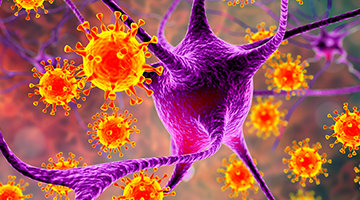
A Vaccine Pathway for Herpes Virus with Gregory Smith, PhD
Gregory Smith, PhD, professor of Microbiology-Immunology at Feinberg, has been investigating a path to long-needed vaccine development for herpes virus. He recently published findings in the journal Nature that bring the possibility of a preventive vaccine a step closer.
-
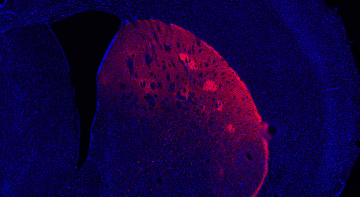
New Insights Into Dopamine with Raj Awatramani, PhD, and Daniel Dombeck, PhD
When most of us think about dopamine, we think about reward signals. But new research from Northwestern Medicine, published in Nature Neuroscience, has found a genetic subtype of dopamine neurons that do not respond to rewards at all, and instead, fire when the body moves. Rajeshwar Awatramani, PhD, and Daniel Dombeck, PhD led this work,…
-

The Evolution of the NIH Toolbox with Richard Gershon, PhD
As the primary investigator of The NIH Toolbox®, Richard Gershon, PhD, has led a team of hundreds of scientists to develop and evolve state-of-the-art digital assessments of cognition, motor, sensation and emotion which has been used by clinicians, investigators and academics for nearly two decades. In this episode, Gershon explains how the third version of…
-
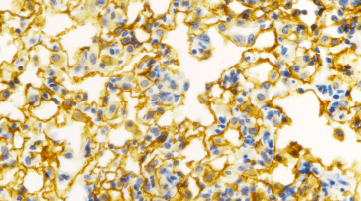
How Mitochondria Inform Disease Discoveries with Navdeep Chandel, PhD
Mitochondria are widely known as cellular “powerhouses” for their role in producing energy for cells. But pioneering research from Northwestern Medicine investigators over the last 20 years has proven mitochondria are also major players in lung disease, cancer, brain disease and immune-related diseases. Navdeep Chandel, PhD, a 2023 recipient of the Lurie Prize in Biomedical…
-
Advancing Transplant Science with Daniela Ladner, MD, MPH
Northwestern Medicine is dedicated to improving outcomes for patients who are in need of organ transplants. Daniela Ladner, MD, MPH, is leading research that sheds light on the barriers to transplantation as the founding director of the Northwestern University Transplant Outcomes Research Collaborative (NUTORC). She discusses the groundbreaking research that makes Northwestern a leader in…
-

How Drinking Alcohol Impacts Aging with Lifang Hou, MD, PhD
Both long-term alcohol consumption and binge drinking can speed up biological aging, according to a Northwestern Medicine study published in the journal Aging. Lifang Hou, MD, PhD, chief of Cancer Epidemiology and Prevention in the Department of Preventive Medicine led the study and discusses the link between genetics and lifestyle in the context of preventing…
-

How AI Can Improve Healthcare Delivery with Mozzi Etemadi, MD, PhD
Mozziyar “Mozzi” Etemadi, MD, PhD, is supporting the transformation of healthcare delivery and patient care at Northwestern Medicine by bringing engineers into direct contact with clinical providers. In this episode, he talks about the explosion of artificial intelligence in healthcare in recent years and how Northwestern Medicine is using this technology to improve healthcare delivery…